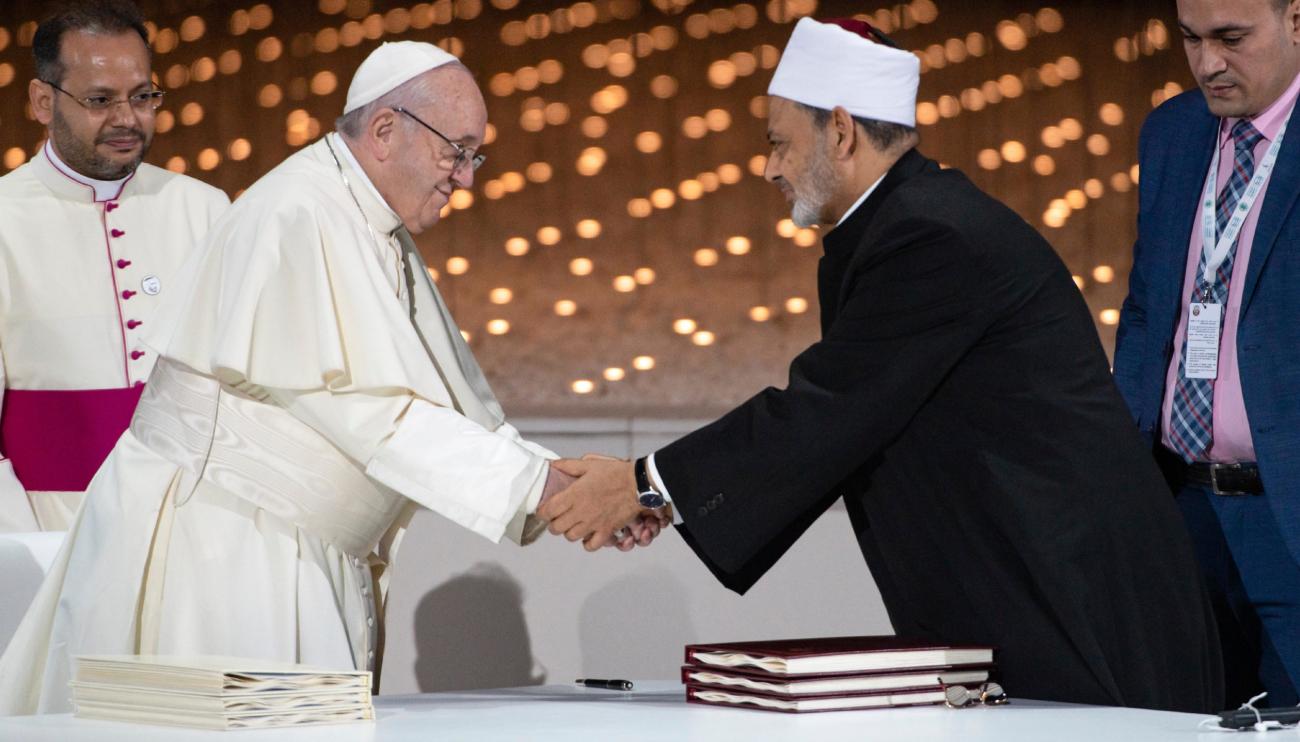
Amman, November 22, Interfax – A council of prominent religious scholars from across the Middle East has issued a joint appeal calling for the revival of interfaith dialogue in the region, warning that recent spikes in hostility and misinformation pose a “serious threat” to social cohesion. The statement followed a two-day symposium in Amman attended by Muslim, Christian, and Druze representatives.
According to the organizers, participants analyzed how online misinformation, political polarization, and unresolved regional conflicts contribute to a decline in trust between faith communities. Several scholars emphasized that young people are particularly vulnerable to divisive narratives circulating on social media.
“When communities live side by side for centuries, hostility does not emerge naturally — it is manufactured,” said Sheikh Mahmoud al-Khatib, a Sunni scholar from Jordan. “Much of the current mistrust comes from manipulated information and rumors designed to provoke fear.”
Christian representatives expressed similar concerns. Father Elias Haddad of Lebanon noted that interfaith relations have traditionally been resilient, but economic hardship and political instability are making it easier for extremist groups to exploit tensions. “People under pressure are more susceptible to simplistic narratives,” he added.
Dr. Rima Sayegh, a Druze academic from Syria, warned that politicizing faith identities risks undermining fragile peace agreements in several countries. “We must not allow religion to be used as a weapon in political disputes,” she said.
Participants also discussed recent incidents involving vandalism of religious sites and online harassment campaigns targeting minority groups. Several speakers urged governments to strengthen legal protections for religious communities and to respond more decisively to hate speech.
The symposium’s final document calls for reopening stalled dialogue forums, organizing joint educational initiatives, and establishing permanent interfaith councils in each participating country. “Dialogue must not restart only after crises occur,” the statement reads. “It must be a continuous effort that plants the seeds of trust.”
Scholars also encouraged media outlets to adopt higher standards of verification when reporting on sensitive religious issues. “Careless reporting can inflame tensions just as quickly as deliberate misinformation,” al-Khatib said.
The participants expressed hope that renewed cooperation would “restore confidence between communities” and reinforce the region’s longstanding tradition of coexistence.

Interfax-relegion.com Editorial Team
Sean Phillips
I’m Sean Phillips, a writer and editor covering and its impact on daily life. I focus on making complex topics clear and accessible, and I’m committed to providing accurate, thoughtful reporting. My goal is to bring insight and clarity to every story I work on.
0 Comment