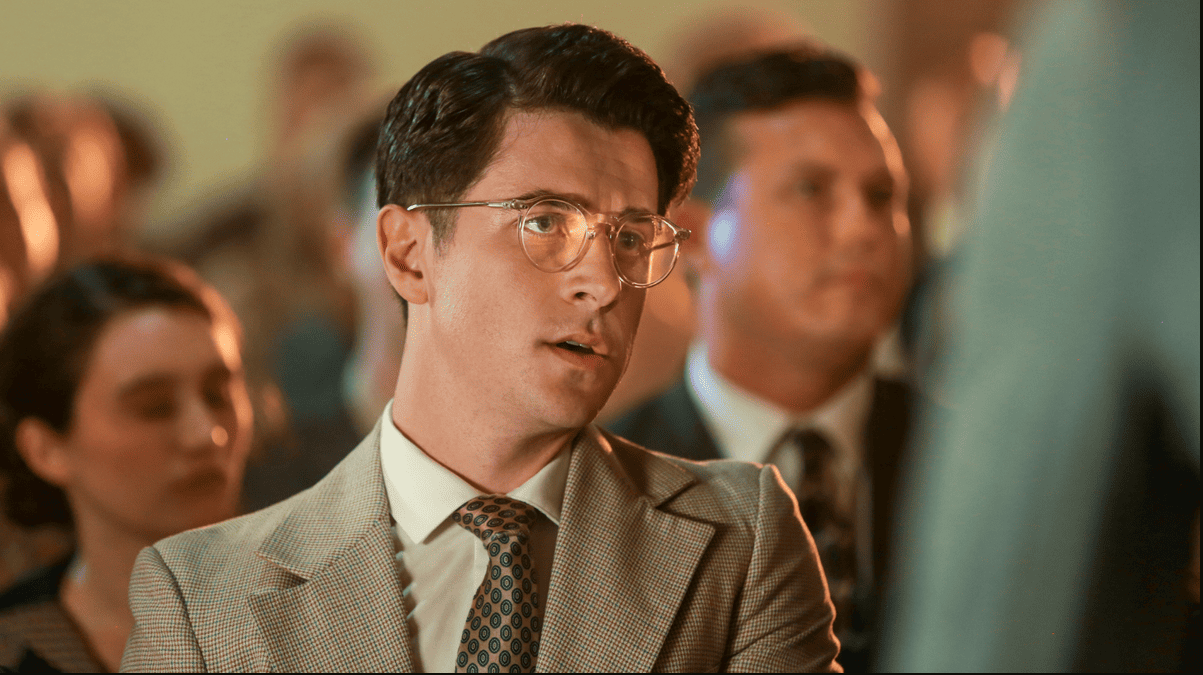
For much of his early life, David Henrie believed success was supposed to feel permanent. Raised on television sets and propelled into early fame, he describes those years as intoxicating and ultimately hollow.
In his teens and early twenties, Henrie was already a recognizable face, buoyed by online popularity and steady acting work. The rewards came quickly: attention, validation, status. But like a fleeting sugar rush, the excitement faded. What remained, he says, was anxiety and a constant need for external approval a life driven by accumulation rather than meaning.
That internal reckoning began to surface while he was filming Little Boy in 2015. On set, Henrie found himself in conversations with two older co-stars who took his background seriously in a way he hadn’t expected. Kevin James and Eduardo Verástegui, both practicing Catholics, asked him direct questions about the faith he had inherited but largely set aside. More importantly, they engaged him without irony with conviction and clarity.
Those conversations didn’t stay theoretical. During the shoot, James invited Henrie on a drive to St. Michael Abbey in Orange County. There, Henrie went to confession for the first time since childhood. The experience, he says, was not nostalgic or sentimental it was grounding. It reintroduced him to a version of Catholicism he hadn’t known before: structured, demanding, and unapologetically disciplined.
What struck him most was the tone of the Norbertine community. The monks’ emphasis on strength, order, and responsibility shattered his assumption that faith was passive or fragile. Years later, that same abbey would host figures like Jordan Peterson, whose message about moral clarity and purpose resonated with many of the same young adults.
Henrie believes the cultural climate has shifted since then. In Hollywood and across the U.S. religion no longer carries the same stigma it did a decade ago. Where faith once felt professionally risky, it is now increasingly viewed as a source of depth and identity. Executives, he says, are paying attention to communities they once dismissed.
Rather than keeping his beliefs private, Henrie chose to engage publicly. He joined the board of the Napa Institute, participating in conversations about art, culture, and belief alongside other Catholic creatives. At one of the institute’s recent gatherings, he appeared on a panel focused on reclaiming artistic spaces for meaning-driven work. Later that year, he joined Jonathan Roumie at a Eucharistic procession in New York.
His professional choices have followed the same direction. While in Rome, Henrie served as a brand ambassador for Cross Catholic Outreach, helping raise awareness for its Box of Joy initiative. The program invites families and parishes to assemble gift boxes for children in impoverished regions a small gesture, Henrie says, that carries disproportionate meaning.
He and his wife, former Miss Delaware Maria Cahill, have personally delivered these boxes in countries like the Dominican Republic and Guatemala. One moment stays with him: a young girl who, upon learning she had received the final box, gave it to her younger brother instead. The encounter, Henrie recalls, reframed his understanding of generosity.
Rome holds particular significance for their family. Years earlier, during a private meeting, Henrie asked Pope Francis to bless them after his wife had endured multiple miscarriages. Months later, they welcomed their first child. Today, they travel with their three children, weaving family life into Henrie’s professional commitments.
He was also in the city to promote Seeking Beauty, a documentary travel series exploring art, culture, and faith, scheduled to premiere on EWTN. The project reflects the same integration he now seeks in his life: creativity anchored by conviction.
Though he has not yet met Pope Leo XIV, Henrie says he hopes the opportunity will come. For him, the symbolism matters. An American pope, he says, signals something larger not triumph, but a reminder that faith and public life no longer need to exist in separate spheres.

Sean Phillips
I’m Sean Phillips, a writer and editor covering and its impact on daily life. I focus on making complex topics clear and accessible, and I’m committed to providing accurate, thoughtful reporting. My goal is to bring insight and clarity to every story I work on.
0 Comment