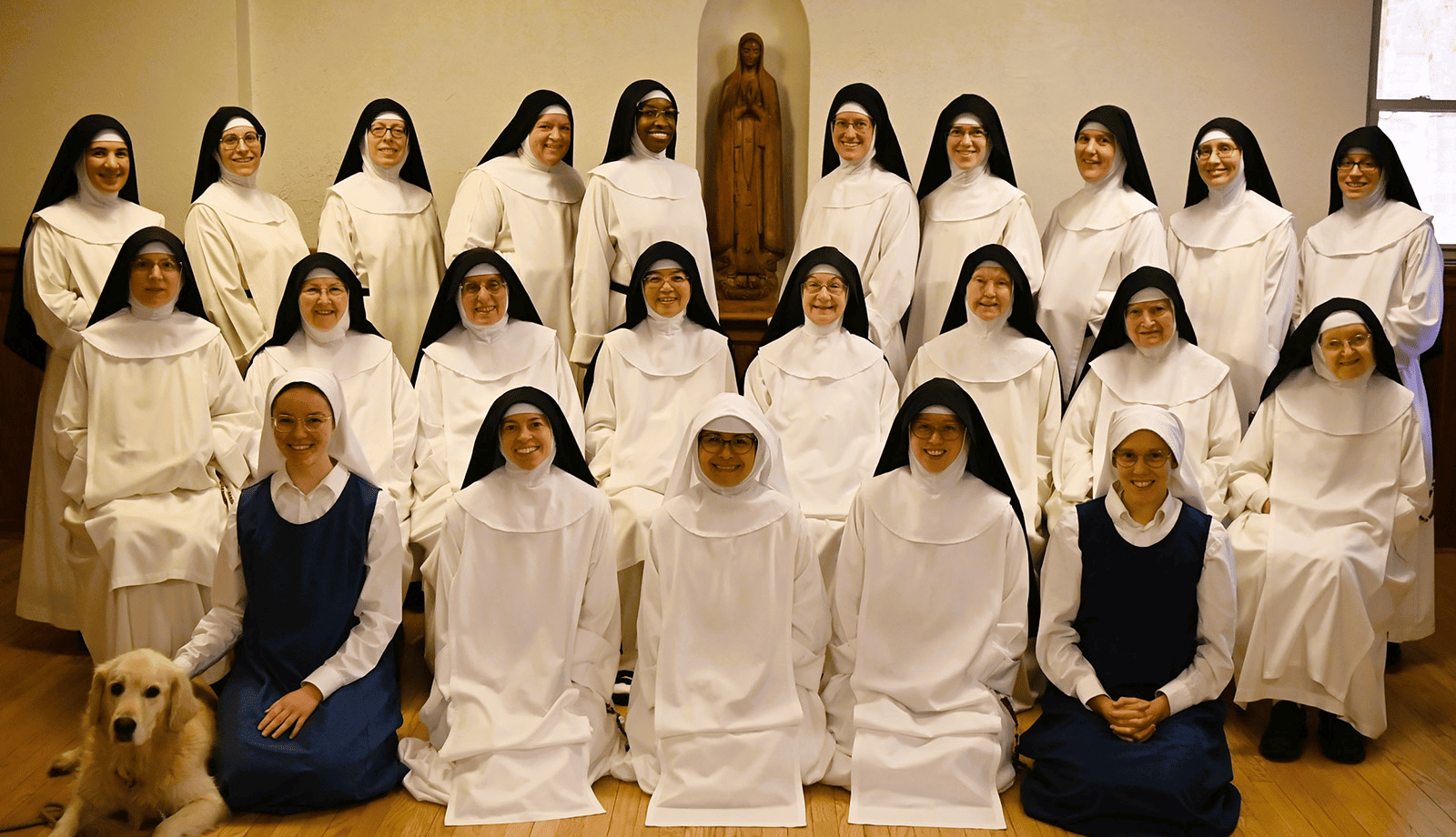
Sister Mary Magdalene of the Immaculate Conception Prewitt, a Dominican nun in her late thirties, is often asked how her life journey carried her from the plains of Kansas to the quiet walls of a cloistered monastery in New Jersey. In her book Joy Within His House, she offers a thoughtful and personal exploration of that path — from her college years in Pittsburg, Kansas, to an enclosed Dominican monastery in Summit, New Jersey.
Today, she lives in a community of women spanning generations, from those in their early twenties to sisters well into their nineties. Alongside daily prayer and shared work, the monastery also welcomes visitors who are discerning whether contemplative life may be their own calling.
More Than a Memoir
While Joy Within His House draws from Sister Mary Magdalene’s personal story, it is not written as a simple autobiography. Instead, the book serves as an accessible introduction to contemplative Dominican life. Readers are guided through the rhythm of monastery living — structured prayer, study, silence, shared recreation, and the deeper spiritual meaning of enclosure.
The book is visually enriched with atmospheric photographs by Jeffrey Bruno, offering glimpses into spaces and moments that are usually hidden from public view. Together with these images, the text helps demystify a way of life that many people find distant or difficult to imagine.
Scripture, Tradition, and Literature
One distinctive feature of the book is its wide range of references. Alongside Christian Scripture and Catholic teaching, Sister Mary Magdalene draws heavily on literature. She reflects on classic novels that illuminate the complexities of human nature, including works such as Middlemarch, The Brothers Karamazov, and Anna Karenina. She also highlights Sigrid Undset’s Kristin Lavransdatter, a Nobel Prize–winning historical trilogy centered on a deeply human and unconventional heroine.
For her, literature becomes a bridge — a way to explore universal struggles, moral choices, and inner transformation that resonate far beyond the monastery walls.
Making Monastic Life Understandable
One of the author’s central goals is to make the fundamentals of cloistered life understandable to those outside religious communities. She writes candidly about ordinary experiences that readers can easily recognize: doctor visits, emergencies, household logistics, and even grocery shopping. By doing so, she reframes the monastery not as an isolated fantasy world, but as a place where everyday realities coexist with sustained prayer.
Her hope is that readers — regardless of their religious background — can learn practical spiritual principles that help them grow closer to God in their own circumstances.
Why She Felt Compelled to Write
According to Sister Mary Magdalene, misunderstandings about cloistered life are widespread. Many people imagine it as either oppressive or unrealistic. Writing the book became a way to gently correct those assumptions, while also sharing the spiritual tools that make monastic life fruitful.
At its core, the book aims to show that the monastery offers a concentrated environment for practices that are valuable to all Christians, not just those who live behind enclosure walls.
Discerning a Vocation
Her journey toward religious life began during college, when questions about purpose and happiness became unavoidable. Through sustained prayer and reflection, she gradually recognized that paths she once assumed would satisfy her no longer felt right.
Rather than a sudden revelation, her vocation unfolded slowly through attentive listening — asking where God was leading her, and whether that direction allowed both joy and spiritual growth. Over time, contemplative life emerged as the place where those desires aligned.
Life in Community: Reality and Grace
Sister Mary Magdalene speaks openly about the challenges and rewards of communal living. She emphasizes that shared life in a monastery is not fundamentally different from family life or even a college dormitory. Differences in personality and habits are inevitable.
The key distinction, she explains, is unity of purpose. In religious life, the shared goal of seeking union with God provides a foundation that helps members move beyond everyday tensions. Her past experience working in a restaurant, where small conflicts could quickly escalate, only reinforced how transformative that shared focus can be.
What Sets Contemplative Life Apart
While all Christians are called to grow closer to God, contemplative religious life is shaped by intentional separation from the wider world. Enclosure creates space for sustained prayer and attentiveness, allowing individuals and communities to focus entirely on that central goal.
The structure of the day supports this focus, weaving prayer, work, and rest into a rhythm designed to foster spiritual depth and mutual support.
Learning How to Pray for Others
When it comes to intercessory prayer, Sister Mary Magdalene describes it as an act of listening rather than strategy. Some intentions stand out more strongly than others, guided by an inner sense of prompting. Sometimes a single prayer request lingers in the heart, while others remain more general.
She believes that discernment in prayer is less about precision and more about trust — trusting that God orders intentions even when they feel incomplete or fragmentary.
Why Literature Matters
The inclusion of classic literature is intentional. For Sister Mary Magdalene, great novels articulate truths about human longing, failure, and redemption in ways that theology alone sometimes cannot. She points to St. Augustine’s Confessions as a powerful example: a deeply personal life story that unfolds entirely as a prayer.
Literature, she argues, captures the rawness of human experience and gives readers language for realities that are otherwise difficult to express.
A Window Into a Hidden World
Ultimately, Joy Within His House offers readers a window into a life rarely seen, without romanticizing or oversimplifying it. The book invites reflection not only on monastic vocation, but on how prayer, attention, and purpose can shape any life.
Rather than presenting the monastery as an escape from the world, Sister Mary Magdalene portrays it as a place where the deepest questions of human existence are faced with honesty, discipline, and hope.

Interfax-relegion.com Editorial Team
Sean Phillips
I’m Sean Phillips, a writer and editor covering and its impact on daily life. I focus on making complex topics clear and accessible, and I’m committed to providing accurate, thoughtful reporting. My goal is to bring insight and clarity to every story I work on.


0 Comment